
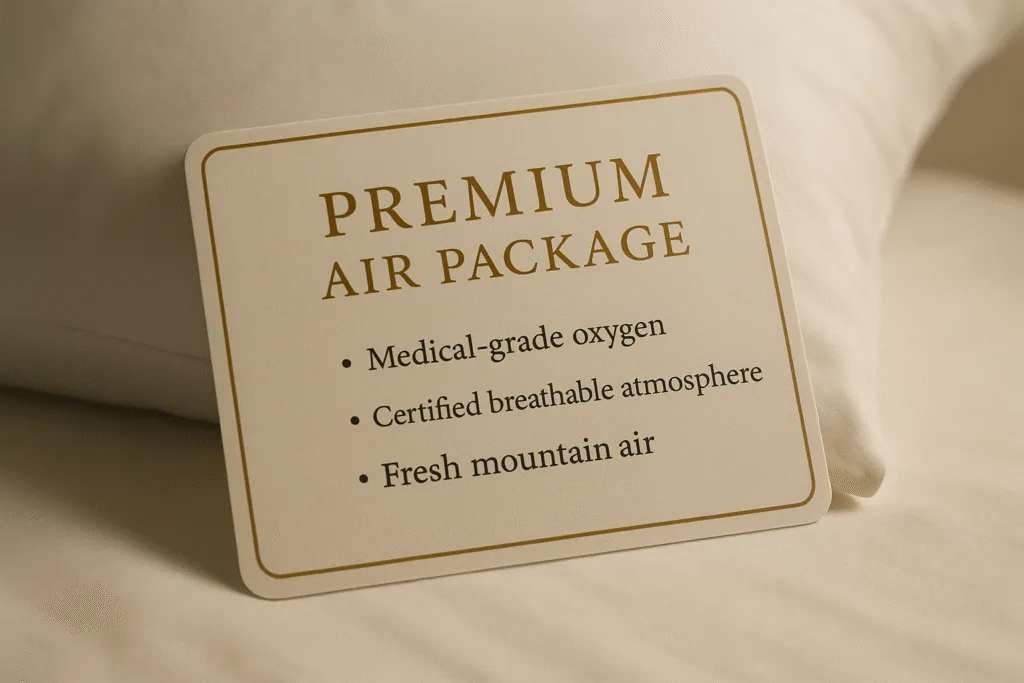
Forward-thinking hoteliers have identified their most undermonetized asset: the very air their guests breathe.
Industry insiders report that Indoor Air Quality (iAQ) – once a baseline expectation relegated to HVAC maintenance budgets – has emerged as hospitality’s most exciting revenue opportunity since minibar M&Ms. “We’ve maximized every square foot, every thread count, every lobby scent diffuser,” explained one anonymous revenue manager at a major hotel group. “Air was just sitting there, unmonetized.”
The strategy is elegantly simple: subtly decrease iAQ standards in base-tier rooms to create contrast with newly introduced “Pure Air Suites,” complete with HEPA filtration systems and what marketing materials describe as “medically adjacent breathing experiences.” What was once standard maintenance in urban properties battling smog and exhaust fumes has evolved into a lucrative two-tier atmospheric model rolling out nationwide.
The restaurant sector, never one to miss a trend, is experimenting with similar innovations. Several establishments have begun strategically routing kitchen “essence” – a rebrand of what safety codes traditionally call “exhaust” – toward less premium seating areas. “It’s immersive dining,” one GM insisted. “Our walk-in guests near the kitchen hallway get an authentic, aromatic journey. Our reservations with wine pairings get Swiss-engineered air purification. Everybody wins.”
This creative interpretation of occupancy standards has sparked spirited discussions between brand compliance teams and those tiresome municipal inspectors who apparently lack vision. The resulting “grey area” has proven surprisingly spacious, with legal teams working overtime to redefine words like “adequate” and “ventilation.”
Major booking platforms are already adapting. Sources confirm that OpenTable, Expedia, and their competitors are developing iAQ search filters, with beta categories ranging from “Budget Breathable” to “Luxury Lung Performance.”
As one hospitality consultant noted, “We’ve spent decades perfecting the art of charging more for what used to be included. Indoor Air Quality isn’t just the next frontier – it’s the most democratic one yet. After all, everyone needs to breathe.”